Decolonial and collaborative fresco
The project
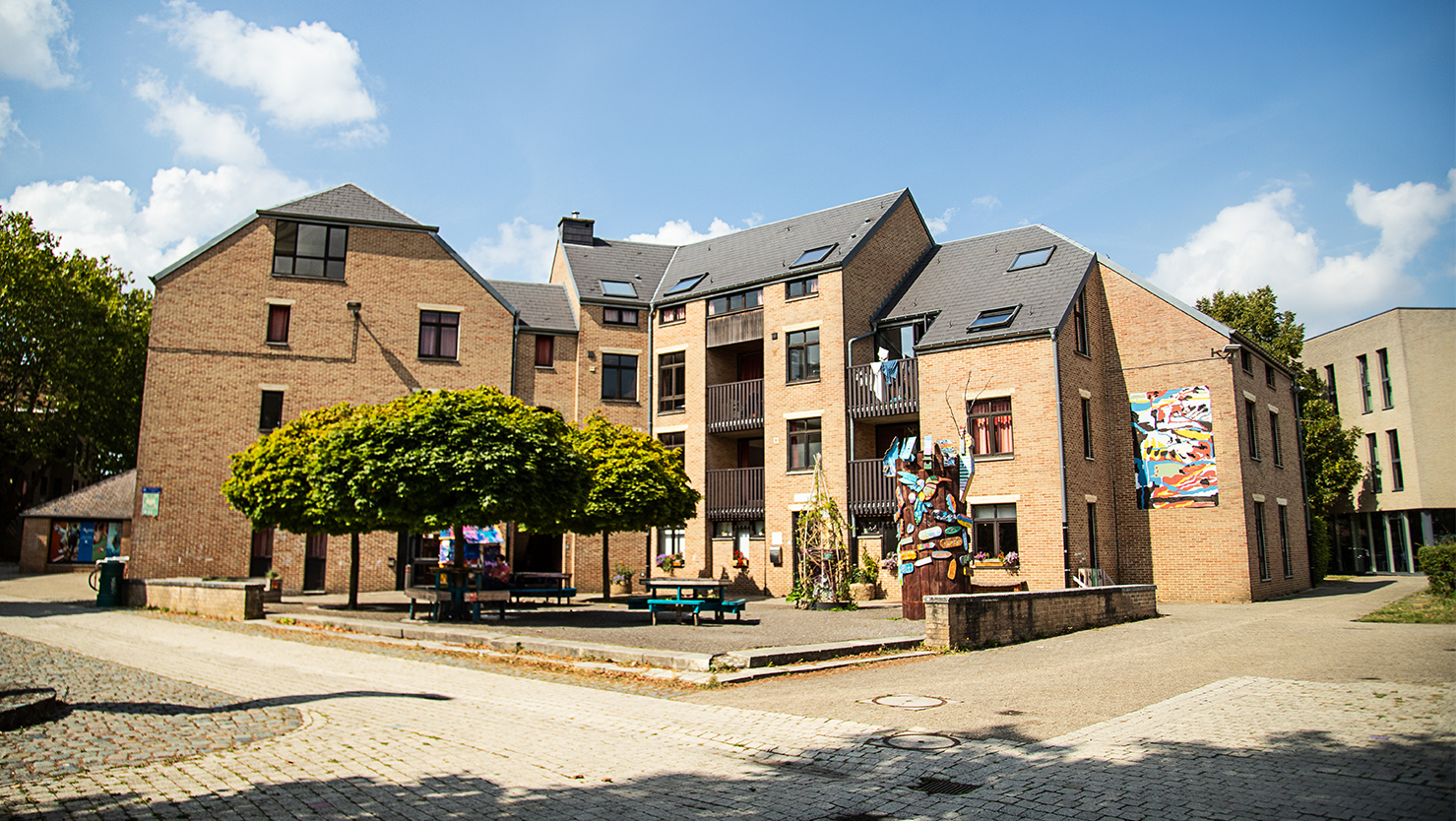
The collaborative fresco is an initiative of the Placet Center, born in the wake of the decolonial stroll project on the Louvain-La-Neuve campus1.
The Placet Center supports international students in Louvain-la-Neuve. For several years, he has explored questions of interculturality and coloniality in the spaces, knowledge and stories that surround us.
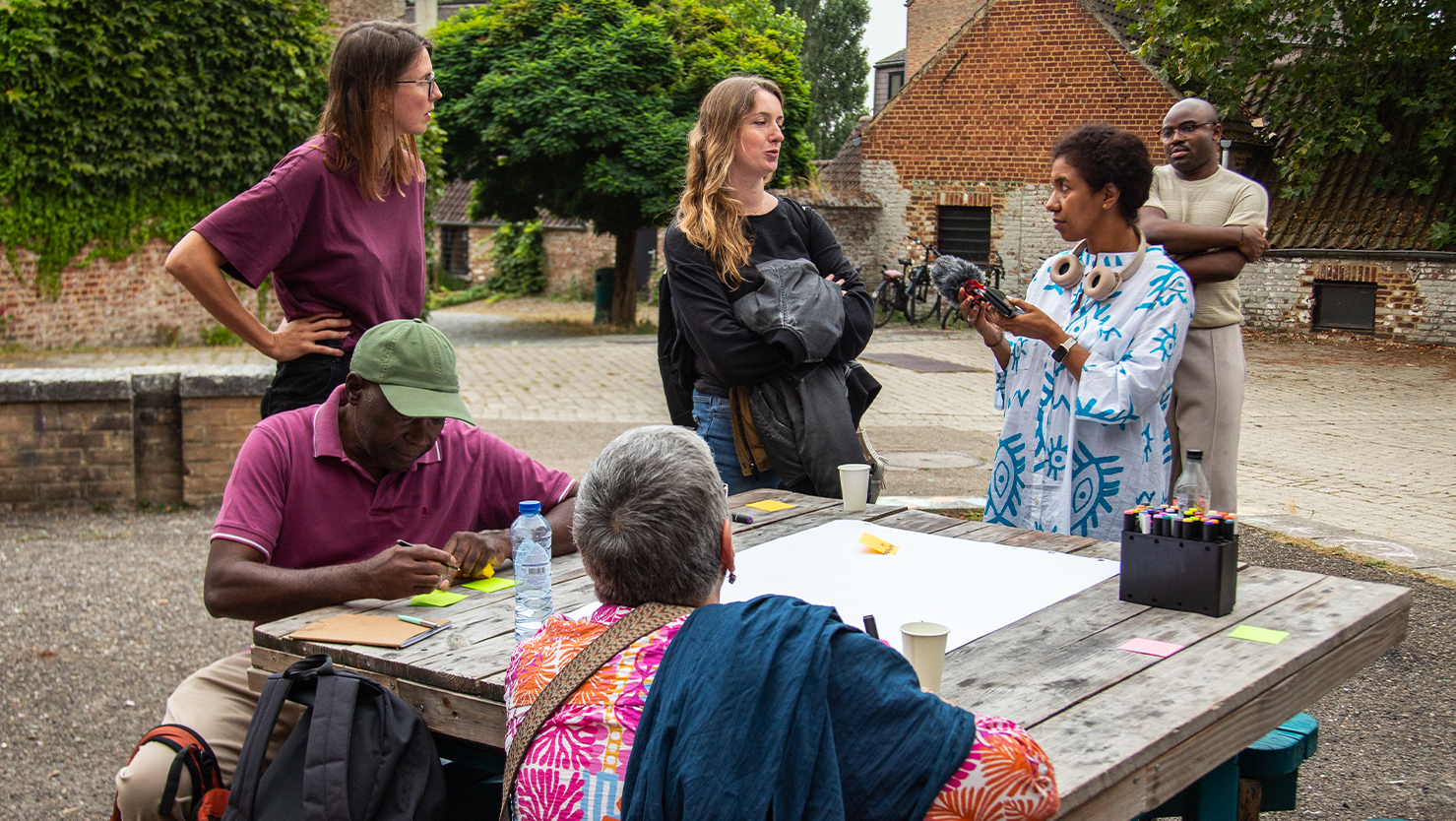
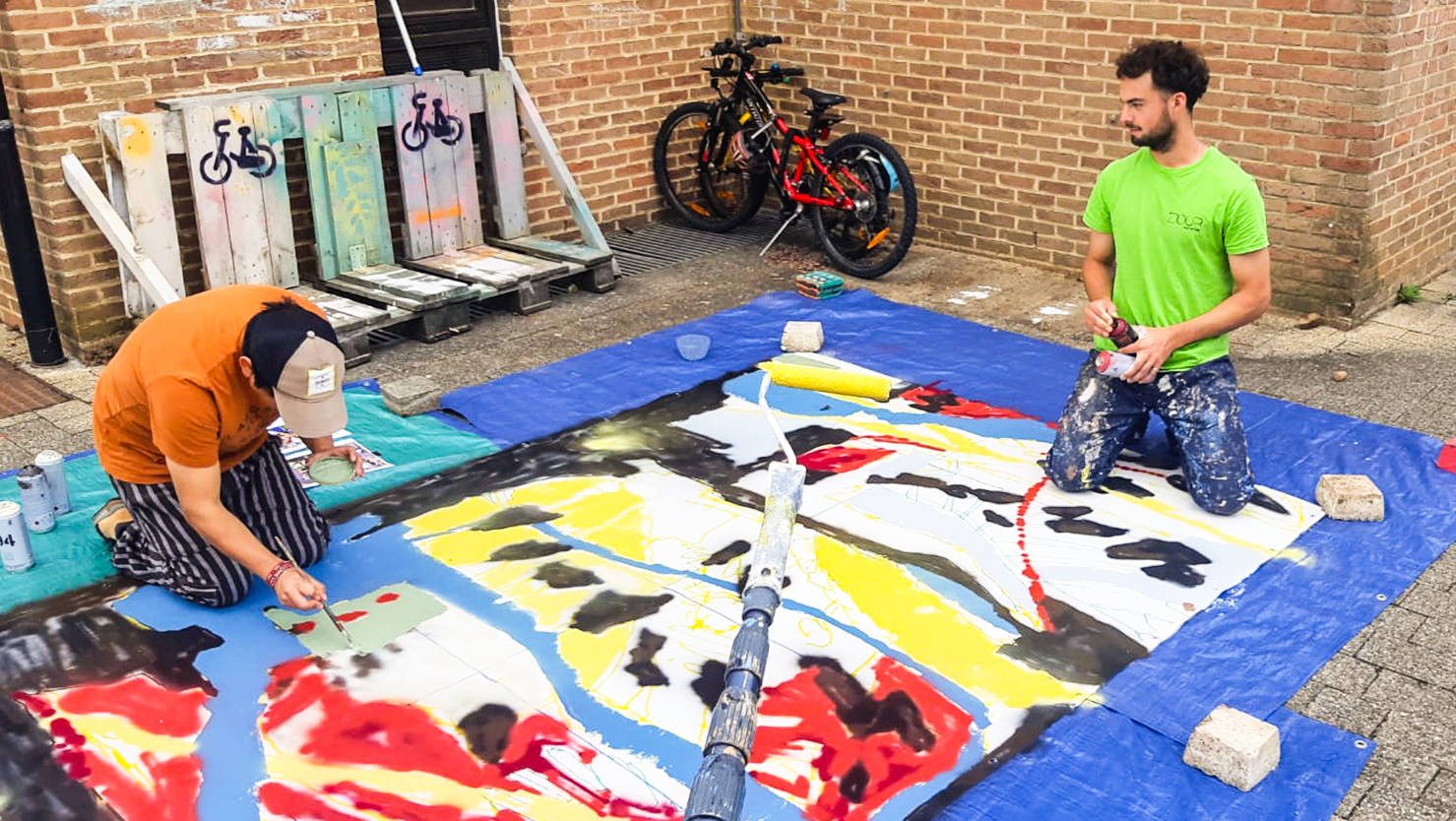
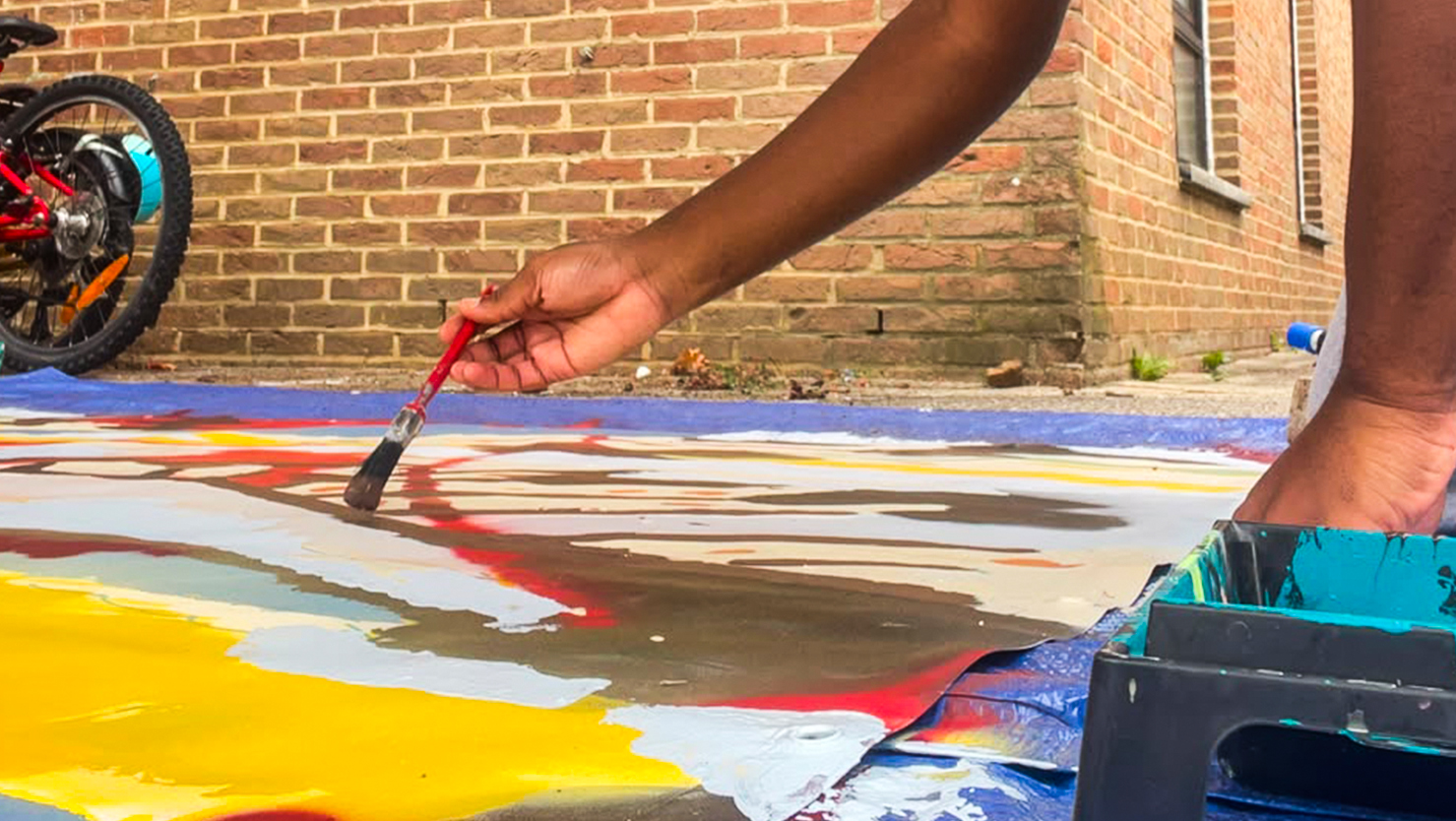
This fresco is the result of a participatory process: it was built with and by citizens and members of the team, based on what they saw, felt and thought during a week of workshops in August 2025.
The fresco comes from a multi-step process, designed with Eric Arenas (doctoral student in political and social sciences & resident of the Placet Center) and artistically created by Loup Bellem.
How was the fresco created?
1. Animation with the Colonial Memory and Fight against Discrimination Collective: collective exploration of colonial traces present in the university space & collection of words - everyone shared a key word associated with an emotion, a question or a reaction.
2. Creative workshop: discussion on the notion of colonization, followed by a painting phase - each participant created an individual canvas to form a multitude of flags.
3. Creation of the fresco - Loup Bellem worked from all of these materials to compose a collective abstract work.
4. Collective production - participants who wished contributed to the painting of the fresco.
Note of intent from the artist, Loup Bellem
"This painting is above all a way to immortalize the walks and exchanges we had this week around colonial memory. To create it, I started with the keywords written by the participants after Monday's walk. I sought to translate into emotions and sensations everything that emerged from our discussions. I chose an abstract style because I find that it can intrigue, everyone has their own way of perceiving it. This encourages you to ask questions, both alone and in a group, and it naturally launches the debate. I like the idea that the visual can appeal. And if people will want to know more. All they have to do is scan the QR code just below to discover the full explanation of the project. The aim of this work is to keep track of these moments of awakening which make you want to question the past and make things happen. In this context, it was essential for me to create a painting that reflects a collective approach and to visually express the energy of this workshop. "
They talk about it
Decolonization means questioning the stereotypes and representations inherited from the colonial period concerning African, Asian or indigenous populations. "
"It is important for me to be part of a civic space and/or a collective that respects differences and singularities at the same time. Where our voice is possible and heard as an opportunity, a talent that opens up to the world. "
Poem “Masa” by César Vallejo
"In these times marked by conflict, individualism and the vestiges of colonization, we appeal for human solidarity and collective union, in the hope of building a world where several worlds can coexist. This is why César Vallejo (Peruvian poet) addresses this appeal to us. "Eric Arenas
| French | Spanish |
|
At the end of the battle, Two others approached him and repeated: Twenty, a hundred, a thousand, five hundred thousand rushed towards him, Millions of people surrounded him. So all the men of the earth |
Al end of the batalla, Two came up and said to him: Acudieron elected, cien, mil, quinientos mil, The rodearon millones de individuos, Entonces todos los hombres de la tierra |
What the fresco evokes for them...
"A story, diversity, unity in diversity, hope. "
"Movement, mixing, diversity, complex and rich world, entanglements, encounters, fluidity of water, hardness of black, bright zones, more difficult zones, islands of respite. "
And you?
Does this fresco mean anything to you? Did you participate in one of the workshops and would like to leave a trace?
Share your reaction, your testimony or your thoughts via the form below. Some answers may be added to this page.
Decolonial fresco - impressions, evocations
With the support of the Wallonia-Brussels Federation.